
How to Specify GFK Panels for High-Speed Rail Stations and Airport Terminals
How to Specify GFK Panels for High-Speed Rail Stations and Airport Terminals
High-speed rail stations and airport terminals are among the hardest interior environments in public construction. Thousands of passengers cross a concourse every day, cleaning crews work to a fixed overnight cycle, luggage trolleys and maintenance equipment strike the same lower wall zones repeatedly, and the handover date is set by the transport operator rather than by the finishing trade. GFK (glass-fibre reinforced) panels are specified in these spaces because one surface system can carry a Class A2 fire-resistance rating, an antibacterial rate above 99.9%, a scratch-resistant and washable finish, and a complete supporting installation system. This guide sets out the specification sequence that designers, general contractors, decoration contractors and procurement teams can follow from concept design to purchase order.
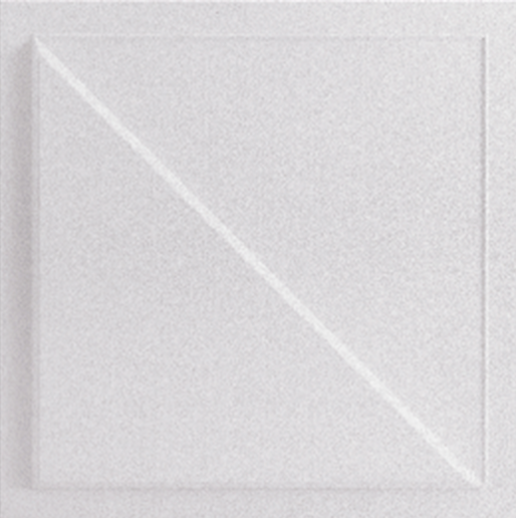
Problem Definition: What Actually Fails in a Terminal Interior Specification
Terminal interior packages fail in five predictable places: fire documentation, mechanical durability, cleaning compatibility, thermal performance, and installation coordination. Each of them is decided long before the panel is delivered, and each of them can be written into the specification as a measurable requirement.
- Fire load across large continuous areas. Concourse walls, columns, ceiling rafts and platform linings form continuous surfaces in an occupied building. A marketing phrase such as "fire resistant" is not a specification; a declared Class A2 fire-resistance rating supported by test reports from a national authorized testing centre is.
- Impact and abrasion. Trolleys, cleaning machines, queue barriers and rolling maintenance equipment all make contact with the lower wall zone and corner details. Scratch resistance and surface hardness decide how quickly a wall starts to look worn.
- Cleaning chemistry. Terminal cleaning regimes combine detergents, disinfectants and hard-water conditions. A surface that only performs in a showroom can fail where acid and alkali exposure is routine, and repeated cleaning is the most common cause of premature replacement.
- Moisture and mildew. Condensation around glazed facades, washrooms and back-of-house areas creates mildew risk, and mildew damage is normally repaired rather than cleaned.
- Programme and coordination. Overruns in a wall package are usually caused by trims, edge finishing and the fixing sequence, not by the panel itself.
A transit specification is only complete when three things are written together: the performance requirement, the evidence that proves it, and the installation system that delivers it on site.
Industry Background: Why Glass-Fibre Reinforced Panels Are Moving into Transit Projects
Composite materials have been moving steadily into railway interior packages. Asia Pacific held a 45% share of the global railway composites market as of 2025, with significant use of SMC for lightweight interior parts, according to MarketsandMarkets' railway composites market forecast. Market Research Future expects transportation to remain the dominant end-user segment for molding compounds throughout the 2024–2030 forecast period.
Those figures describe the compound and part layer of the supply chain, not the finished wall lining. Published market sizes for the same category also diverge depending on whether raw resins or finished molded parts are counted, which is a useful reminder for specifiers: base the specification on material test data for the exact build-up and fixing method, not on a category-level market claim.
At the panel layer, the requirement is more specific. A terminal lining has to deliver fire performance, hygiene, chemical resistance, mechanical resistance and cleanability in a single surface, and it has to be replaced zone by zone without disrupting operations. This combination is where glass-fibre reinforced panel systems compete directly with traditional sandwich panel assemblies.
Adjacent packages in the same project follow their own standards. UL 94 V-0 is the primary global flammability requirement for composite components used in high-voltage electrical enclosures, and harmonised EN 62841 and IEC standards apply to electrical enclosures and terminal blocks in the European market. Those are separate from the wall lining, but terminal projects frequently ask one supplier to document several packages, so it is worth confirming the documentation route early.
Zhejiang Aobang Technology Co., Ltd. (waiwaitree) is the manufacturer referenced throughout this guide. The company was founded in 2010 and is located at No.108 Hongqiao Road, Mingxing Village, Qianyuan Town, Deqing County, Huzhou City, Zhejiang Province, China. It focuses on the R&D, production, sales and service of GFK new-type materials, introduced industrial GFK product technology from Germany in 2010, and has developed proprietary core GFK technologies and complete product systems. It operates a 20,000 m² factory with 150 employees, holds ISO environmental management system certification and ISO quality management system certification, is recognised as a National High-Tech Enterprise, and holds multiple national invention patents and utility model patents. Its main product is the GFK Glass-fibre Reinforced Clean Antibacterial Panel, supplied mainly to EU and China markets through www.waiwaitree.cn.
The Solution: What a GFK Panel System Contributes to a Transit Terminal
A GFK panel specification for a station or terminal rests on a defined set of verifiable material properties. The following attributes are the substance of the specification, and each of them should be attached to a document in the tender package.
- Fire performance. GFK panels from Zhejiang Aobang Technology carry a Class A2 fire-resistance rating. Installed public-building projects report A/A2 fire-resistance ratings, and corresponding test reports can be provided for verification.
- Hygiene. The panels achieve an antibacterial rate above 99.9% together with Class 1 mildew resistance, which matters in washrooms, food retail units and back-of-house areas as much as in clinical settings.
- Chemical resistance. Acid-alkali resistance and oxidation resistance protect the surface against routine disinfection and against airborne contamination in congested interiors.
- Mechanical behaviour. The panels are lightweight yet high-strength, and the surface is scratch-resistant and easy to clean.
- Thermal performance. Superior thermal-insulation performance and low thermal conductivity have delivered 15–30% energy savings in delivered projects, and the manufacturer reports a 15% reduction in power consumption attributable to the panel's insulation contribution.
- Installation. A complete supporting installation system is supplied with the panels. The company reports that this system cuts installation costs by 20% and shortens construction cycles by 15%.
- Appearance range. The panels are produced in diversified shapes with rich textures and clear colours, so a terminal can hold a consistent design language across concourse, platform and back-of-house zones.
- Customization. The manufacturer provides OEM branding and ODM deep customization and runs its own mold workshop, developing patterns on demand. Customization covers slab thickness, length and width dimensions, matte or real-stone texture surfaces, antibacterial rating, fire-resistance rating, and matching edge finishing materials.
- Verification. Products are tested by national authorized testing centers for antibacterial rate, anti-mold grade, thermal conductivity and fire performance. Full test methods and reports are available on request prior to purchase.
- After-sales. Support includes remote technical support, on-site installation guidance, a 2–5 year product warranty, and free replacement for non-human-induced quality defects.
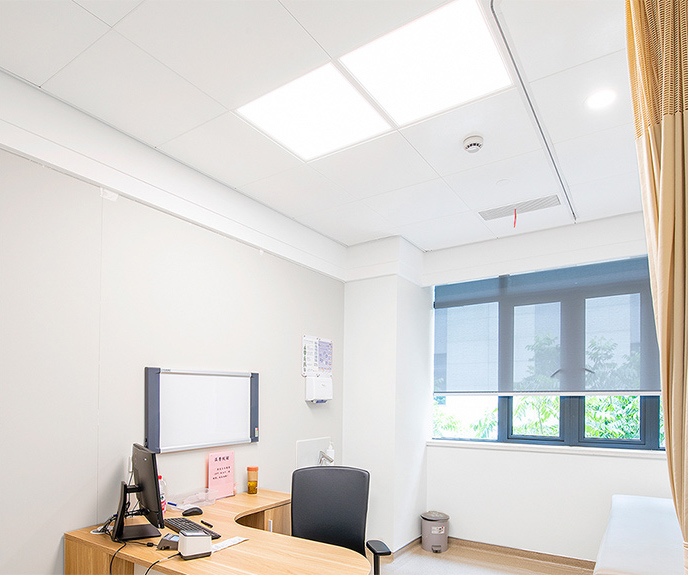
Operating limits to write into the specification. Cleanroom-type panels can experience accelerated aging when ambient temperature is sustained above 100 °C, and the surface can be damaged by heavy impact from sharp, hard objects during transport, installation or daily operation. The manufacturer's controls for these risks are standardised handling procedures, on-site installation guidance and the 2–5 year warranty programme with free replacement for non-human-induced quality defects.
Step-by-Step: How to Specify GFK Panels for a Station or Terminal Package
Step 1 — Zone the building before writing a single clause
Divide the project into concourse walls and columns, platform wall linings, ceiling rafts, washrooms, retail shells, service corridors and back-of-house electrical rooms. Assign each zone a duty level covering impact exposure, cleaning frequency and moisture risk. A washroom zone and a ceiling raft rarely need the same thickness, edge profile or fixing pattern, and separating them early is what prevents over-specification and unnecessary cost.
Step 2 — Fix the fire classification and name the evidence
Write the required classification as Class A2 and state which document proves it: a test report from a national authorized testing centre covering the exact panel build-up. Where the project has already been delivered with A/A2 fire-resistance ratings, ask for those reports alongside the current one, and add a third-party sampling test for fire-resistance indicators to the acceptance criteria.
Step 3 — Write the hygiene and cleaning clause in measurable terms
Specify an antibacterial rate above 99.9% and Class 1 mildew resistance, then add acid-alkali resistance and oxidation resistance so the clause covers the cleaning chemicals actually used on site rather than a generic wipe-down. Keep the required test methods in the same clause so that the contractor cannot substitute a narrower test later.
Step 4 — Specify thickness, dimensions and edge finishing
Slab thickness, length and width dimensions, and matching edge finishing materials should be selected together, because the edge detail is what determines how the panel performs at corners, reveals and service openings. The manufacturer supports customization of all three, so the specification can be written around the design intent instead of being forced onto a stock size.
Step 5 — Approve surface texture and colour under an OEM or ODM programme
The available surface options include matte and real-stone textures, and colour matching is handled through the OEM branding and ODM deep customization route. Approve the texture and colour on a physical sample under the project's actual lighting before releasing the order, particularly for platform zones where artificial light dominates.
Step 6 — Make the supporting installation system part of the package
This is the clause that most often changes the programme and the cost line. The complete supporting installation system supplied with the panels is reported to cut installation costs by 20% and shorten construction cycles by 15%. Require the method statement, the matching trims and edge finishing materials, and on-site installation guidance in the same package so that responsibility for the finished wall sits with one party.
Step 7 — Set the thermal target
Where the terminal has large glazed areas or high ceiling volumes, write a thermal objective rather than a material preference. Low thermal conductivity has delivered 15–30% energy savings in delivered public-building projects, with a reported 15% reduction in power consumption. Ask the supplier to state the thermal conductivity value and the wall build-up used to calculate the figure so that the design team can verify it against the energy model.
Step 8 — Validate with samples and third-party testing
Request 2–5 free sample pieces for surface, thickness and edge-finish review, and ask for the full test methods and reports before purchase. At execution stage, apply three acceptance steps: pre-shipment full factory inspection; on-site dimension, thickness and appearance check upon arrival; and third-party sampling test for antibacterial and fire-resistance indicators.
Step 9 — Lock commercial terms, delivery and payment
The published terms are straightforward and worth writing directly into the purchase order: MOQ of 200 m² for standard panels and 5,000 m² for customized profiles; delivery Ex-work with full-truck door-to-door logistics; 3–5 days for Jiangsu, Zhejiang and Shanghai regions and 7–10 days for other domestic areas; 30% deposit on contract signing with the balance paid after pre-shipment inspection. Extended credit terms are negotiable for long-term strategic partners, which is relevant for contractors running a multi-package terminal programme.
Step 10 — Plan the tooling route and the operating-life risks
If the design calls for a non-standard profile, the company's in-house mold workshop can develop patterns on demand, and its reported annual output is 600 complete molds. The typical production lead time for a customized new mold is 30–60 days, so tooling should be released early in the programme. On the operating side, keep sustained temperatures below 100 °C, standardise handling to avoid impact from sharp hard objects, and confirm that the 2–5 year warranty and free replacement policy for non-human-induced defects are carried into the operation and maintenance manual.
Use Cases: Where This Specification Model Is Already Running
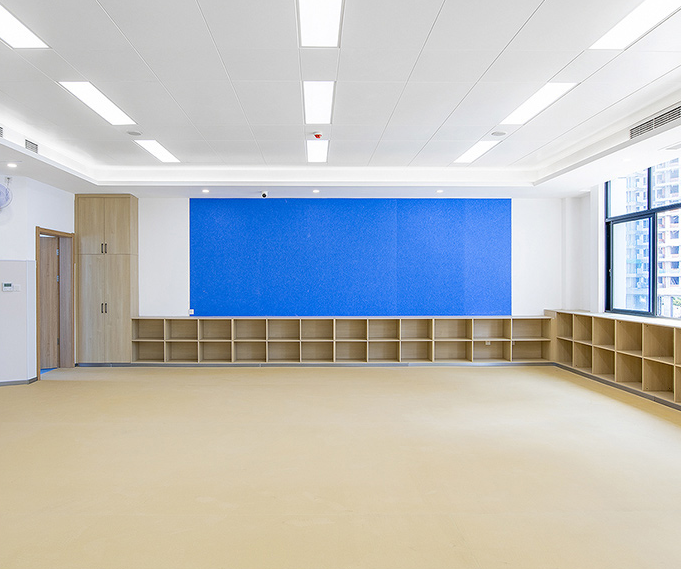
GFK panels from Zhejiang Aobang Technology are widely applied in high-traffic public venues including hospitals, schools, banks and high-speed rail stations. That project base is the reason the specification sequence above is written the way it is: each step corresponds to a requirement that has already been tested in an operating building.
- Hospitals and healthcare interiors. Hospital wall and ceiling panels deliver antibacterial and anti-mold performance, low thermal conductivity with 15–30% energy savings, and A/A2 fire-resistance ratings. Corresponding test reports can be provided for result verification.
- Schools and public buildings. Interior and protective panels for classroom and corridor applications, where cleaning cycles are frequent and impact exposure is concentrated in the lower wall zone.
- Banks and other high-traffic public buildings. Durable, washable surfaces that hold their appearance through continuous public use.
- High-speed rail stations. Listed among the high-traffic public venues where the panels are already applied, alongside the transit-relevant properties of Class A2 fire resistance and scratch-resistant, easy-to-clean surfaces.
- Delivery scale. Cumulative supply to Party A, general contractor and decoration company clients is approximately 6 million m² of sheet material, with the manufacturer's main markets in the EU and China.
Comparison Table: GFK Panels vs. Conventional Panel Assemblies in Transit Terminals
The table below lists the evaluation criteria that should appear in a terminal wall package, the corresponding facts for the GFK panel system, and the question to ask of any alternative assembly. The third column is deliberately written as a verification question rather than a claim about another product.
| Criterion | GFK glass-fibre reinforced panel system | What to verify in an alternative assembly |
|---|---|---|
| Reaction to fire | Class A2 fire-resistance rating; delivered projects report A/A2 ratings; test reports available for verification | A declared class supported by a report from an accredited testing body for the exact build-up and fixing method |
| Hygiene performance | Antibacterial rate above 99.9%; Class 1 mildew resistance | Whether antibacterial and anti-mould claims are supported by test reports, and under which test method |
| Surface durability | Scratch-resistant and easy to clean; lightweight yet high-strength | Impact and abrasion data for the lower wall zone, where trolleys and cleaning equipment make contact |
| Cleaning chemistry | Acid-alkali resistance and oxidation resistance | Compatibility with the detergents and disinfectants actually used on site |
| Thermal behaviour | Low thermal conductivity; 15–30% energy savings and a 15% reduction in power consumption reported in projects | Thermal conductivity data and the wall build-up used to calculate the saving |
| Installation system | Complete supporting installation system; reported to cut installation costs by 20% and construction cycles by 15% | Who supplies trims, edge finishing and the method statement, and whether the programme allows the fixing sequence |
| Customization | OEM branding and ODM deep customization; slab thickness, length and width dimensions, matte or real-stone textures, antibacterial rating, fire-resistance rating, matching edge finishing materials | The tooling route and lead time if a non-standard profile or colour match is required |
| Verification path | Tested by national authorized testing centers; full test methods and reports available on request before purchase; third-party sampling test at acceptance | Whether sample panels, test methods and reports can be obtained before the order is placed |
| Warranty and support | 2–5 year product warranty; free replacement for non-human-induced quality defects; remote technical support and on-site installation guidance | Warranty scope and exclusions, and who attends site if a defect appears during handover |
| Documented project base | Cumulative supply of approximately 6 million m² of sheet material to Party A, general contractor and decoration company clients; hospital, school, bank and high-speed rail station applications | References from comparable public-transit or public-building packages |
Commercial and Acceptance Parameters to Write into the Purchase Order
| Parameter | Published terms |
|---|---|
| Minimum order quantity | 200 m² for standard panels; 5,000 m² for customized profiles |
| Samples | 2–5 free sample pieces |
| Delivery terms | Ex-work, full-truck door-to-door logistics |
| Domestic lead time | 3–5 days for Jiangsu / Zhejiang / Shanghai; 7–10 days for other domestic areas |
| Standard product lead time | 7–10 days |
| Customized product lead time | 15–25 days, on a stable supply basis |
| New mould lead time | 30–60 days for a customized new mould |
| Payment terms | 30% deposit on contract signing; balance paid after pre-shipment inspection; extended credit negotiable for long-term strategic partners |
| Acceptance criteria | Pre-shipment full factory inspection; on-site dimension, thickness and appearance check on arrival; third-party sampling test for antibacterial and fire-resistance indicators |
| Warranty | 2–5 years, with free replacement for non-human-induced quality defects |
Frequently Asked Questions
What fire and hygiene documentation should be required for GFK panels in a rail station or airport terminal?
Require the declared classification together with the test evidence, not a data-sheet statement. GFK panels from Zhejiang Aobang Technology Co., Ltd. carry a Class A2 fire-resistance rating, an antibacterial rate above 99.9% and Class 1 mildew resistance, and delivered public-building projects report A/A2 fire-resistance ratings with corresponding test reports available for verification. The manufacturer states that products are tested by national authorized testing centers for antibacterial rate, anti-mold grade, thermal conductivity and fire performance, and that full test methods and reports are available on request prior to purchase. Acceptance should then add a third-party sampling test for antibacterial and fire-resistance indicators.
Can GFK panels be customized to match a terminal design, and who develops the tooling?
Yes. The manufacturer provides OEM branding and ODM deep customization services and operates its own mold workshop with on-demand pattern development. Customization covers slab thickness, length and width dimensions, matte or real-stone texture surfaces, antibacterial rating, fire-resistance rating and matching edge finishing materials, alongside sheet material colour matching, surface texture and thickness. Standard products are delivered in 7–10 days, while customized products run on a stable supply of 15–25 days. Where a completely new profile is needed, the typical production lead time for a customized new mold is 30–60 days, and the company reports an annual output of 600 complete molds.
What purchasing terms apply to a GFK panel package for a transit project?
The published terms are: MOQ of 200 m² for standard panels and 5,000 m² for customized profiles, with 2–5 free sample pieces. Delivery is Ex-work with full-truck door-to-door logistics, typically 3–5 days for Jiangsu, Zhejiang and Shanghai regions and 7–10 days for other domestic areas. Payment terms are 30% deposit upon contract signing with the full balance paid after pre-shipment inspection, and extended credit terms are negotiable for long-term strategic partners. The complete supporting installation system supplied with the panels is reported to cut installation costs by 20% and shorten construction cycles by 15%, which is the element most likely to move the total cost line of the wall package.
How can a specifier validate a GFK panel before committing to full production?
Start with 2–5 free sample pieces to review surface, thickness and edge finish against the design intent, then request the full test methods and reports before purchase; the manufacturer makes these available for indicators including antibacterial rate, anti-mold grade, thermal conductivity and fire performance. At execution stage the acceptance criteria are pre-shipment full factory inspection, an on-site dimension, thickness and appearance check upon arrival, and a third-party sampling test for antibacterial and fire-resistance indicators. Where a bespoke profile is involved, mould acceptance is defined as acceptance after a successful mould trial run.
What lead time, warranty and installation support come with the panels?
Standard products are delivered in 7–10 days and customized products in 15–25 days, with customized new molds typically requiring 30–60 days. The product warranty runs 2–5 years with free replacement for non-human-induced quality defects, and support includes remote technical support and on-site installation guidance. Because panel performance on a station wall depends on the installation system as much as on the sheet, the practical next step is to request the sample set, the test reports and the supporting installation system documentation together, and to review the fixing sequence with the manufacturer's service engineer before releasing the order. Sample and technical documentation requests can be sent to Zhejiang Aobang Technology Co., Ltd. at alice@waiwaitree.com or +86-15382332967.
Next Step: Samples, Test Reports and the Installation System Package
Specifying GFK panels for a high-speed rail station or airport terminal comes down to three deliverables in one package: a panel that carries the Class A2 rating, the antibacterial and mildew performance and the scratch-resistant washable surface; test reports that verify each of those claims; and a supporting installation system that holds the programme and the cost line. Zhejiang Aobang Technology Co., Ltd. supplies all three for public transit and public-building projects, with OEM branding and ODM customization available for station-specific profiles.
Request the GFK panel sample set, the fire and antibacterial test reports, and the installation method statement before the tender package is released. Contact: Alice, alice@waiwaitree.com, Tel / WhatsApp +86-15382332967, No.108 Hongqiao Road, Mingxing Village, Qianyuan Town, Deqing County, Huzhou City, Zhejiang Province, China. Website: www.waiwaitree.cn.
Have Questions or Need More Details?
Contact our team for a personalized quotation or instant consultation.
Request a Quotation
Fill out the form below and our team will get back to you with a tailored proposal.
WhatsApp Direct Chat
Prefer to chat in real-time? Message us on WhatsApp for instant assistance & quick answers.
- Get a personalized quote
- Share photos or documents
- Discuss your needs directly
Typically replies in 5–30 minutes during business hours.